Potato for Babies: When to Start and How to Serve It by Age
- From around 6 months
- Not a common allergen
- Cook until soft
Potato can be offered from around 6 months, once your baby has started solids. Boil, steam or roast it until it’s soft all the way through. Wedges are easy to hold at first, and mash works well on a spoon. Leave out the salt, and keep chips and crisps for later: they’re salty.
📲 57 Bibful recipes with potatoHow to serve it by age
-
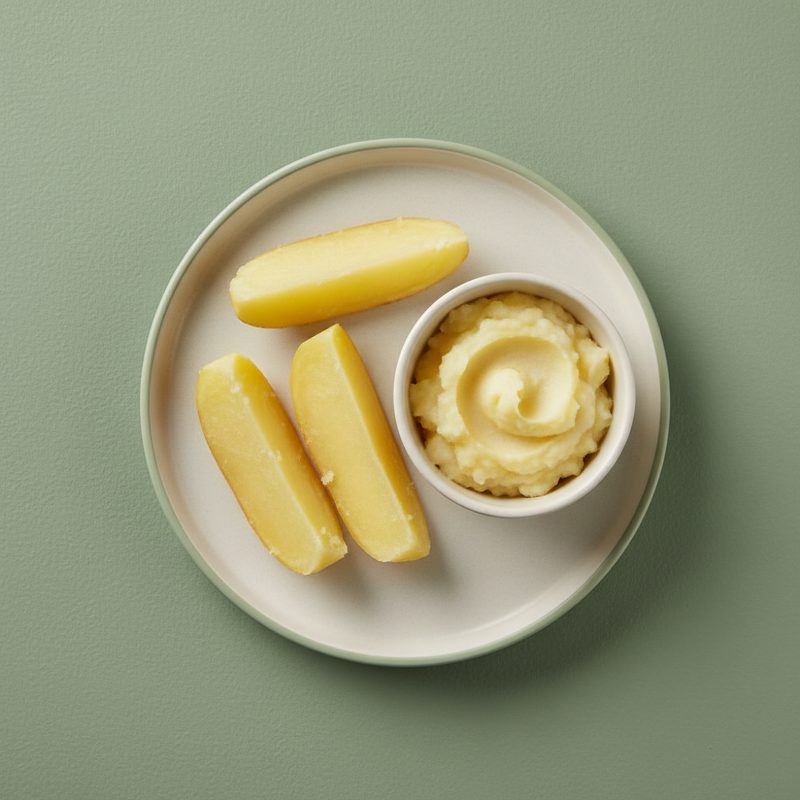 6–8 months
✋ Finger food (BLW)
Thick wedges of potato, boiled or roasted until very soft.
🥣 Purée or spoon
Mash potato with a little of your baby’s usual milk, or blend it with other vegetables.
-
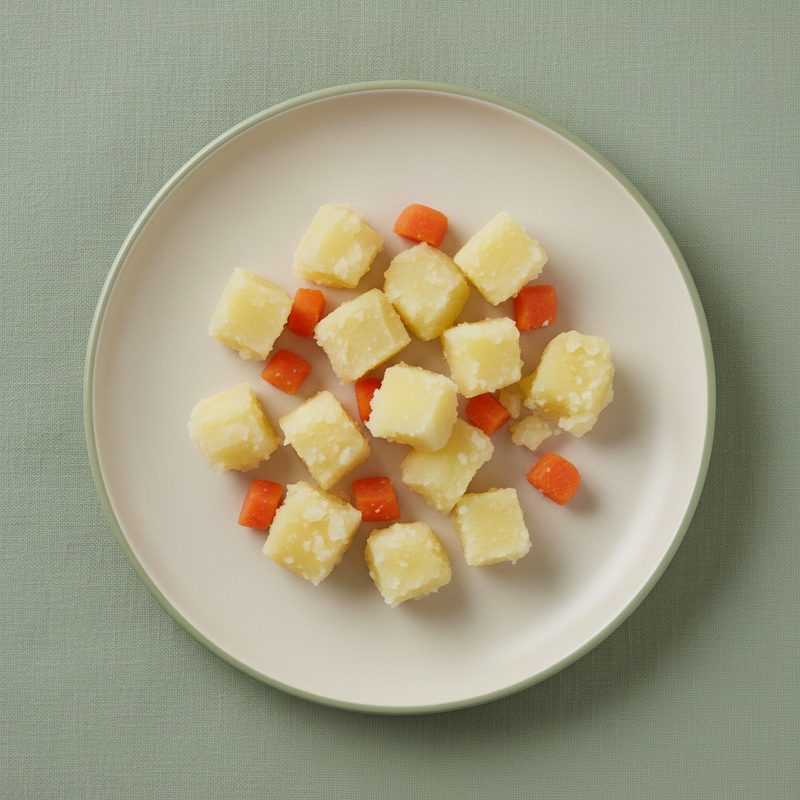 9–12 months
✋ Finger food (BLW)
Small soft cubes of cooked potato, or potato wedges.
🥣 Purée or spoon
Mash potato with fish, egg or vegetables.
-
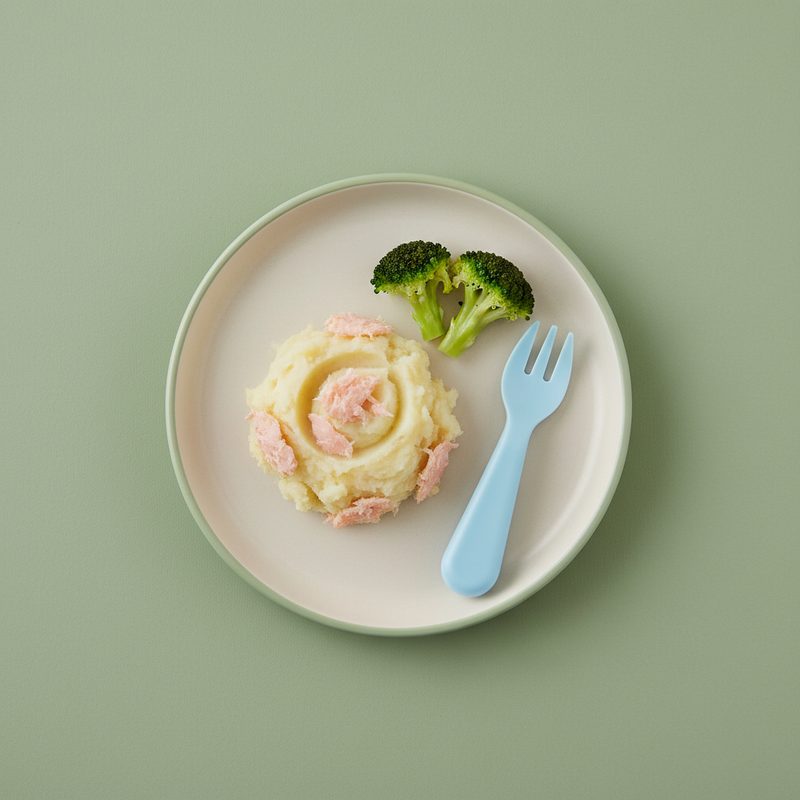 12+ months
✋ Finger food (BLW)
Soft potato pieces and wedges from family meals, cooked without salt.
🥣 Purée or spoon
Potato in fish pie, soups, stews and bakes.
Have potato at home? See what you can cook
Add a second ingredient to see matching Bibful recipes.
57 Bibful recipes with potato
 Potato Cheese Toastie13 min · from 6 months
 Egg & Potato Cheese Bites15 min · from 6 months
 Potato & Kaşar Cheese Omelette18 min · from 6 months
Free to start, with 50+ recipes free · iPhone & Android · no account needed
Preparation tips
- No salt. Cook potatoes in unsalted water and season the grown-ups’ portions at the table.
- Cut out green bits. Cut away green patches and sprouts before cooking, and skip potatoes that are very green.
- Chips and crisps later. Shop-bought chips, waffles and crisps are often salty; homemade oven wedges without salt are a good swap.
Frequently asked questions
When can babies eat potato?
From around 6 months, once your baby has started solids, cooked until soft.
Can babies have potato skin?
Yes, on soft cooked wedges the skin is fine and helps them hold together. Scrub the potatoes well first.
Can I make mashed potato with cow’s milk?
Yes, from around 6 months a little whole cow’s milk in mash is fine. Your baby’s drinks stay breast milk or formula until 12 months.
More first foods
- 🍎 Apple
- 🥑 Avocado
- 🍌 Banana
- 🥩 Beef
- 🫐 Blueberries
- 🍞 Bread
- 🥦 Broccoli
- 🎃 Butternut squash
- 🥕 Carrot
- 🥦 Cauliflower
- 🌿 Celery
- 🧀 Cheese
- 🍗 Chicken
- 🫘 Chickpeas
- 🥥 Coconut
- 🥒 Courgette
- 🥚 Egg
- 🫛 Green beans
- 🍖 Lamb
- 🫘 Lentils
- 🥭 Mango
- 🥛 Cow’s milk
- 🥣 Oats
- 🍝 Pasta
- 🥜 Peanut
- 🍐 Pear
- 🫛 Peas
- 🦐 Prawns
- 🫑 Red pepper
- 🍚 Rice
- 🐟 Salmon
- 🥬 Spinach
- 🍓 Strawberries
- 🍠 Sweet potato
- 🥄 Tahini
- Tofu
- 🍅 Tomato
- 🌰 Walnut
- 🥛 Yogurt
Turn this into tonight’s meal
Bibful turns what's in your fridge into age-appropriate weaning meals — no account needed. Available now on iOS & Android.


This page is general information, not medical advice. It follows NHS Start for Life and World Health Organization guidance on introducing solid foods. Always stay with your baby while they eat, and speak to your health visitor or GP if you have concerns about feeding, allergies or choking.