Egg for Babies: When to Start and How to Serve It by Age
- From around 6 months
- Common allergen
- Cook until white and yolk are firm
Egg can be one of your baby’s first foods from around 6 months. Egg is a common allergen, and current advice is not to delay it: introduce it on its own, in a small amount, and keep offering it regularly once your baby has had it without a reaction. Always cook egg until both the white and the yolk are firm.
📲 226 Bibful recipes with eggHow to serve it by age
-
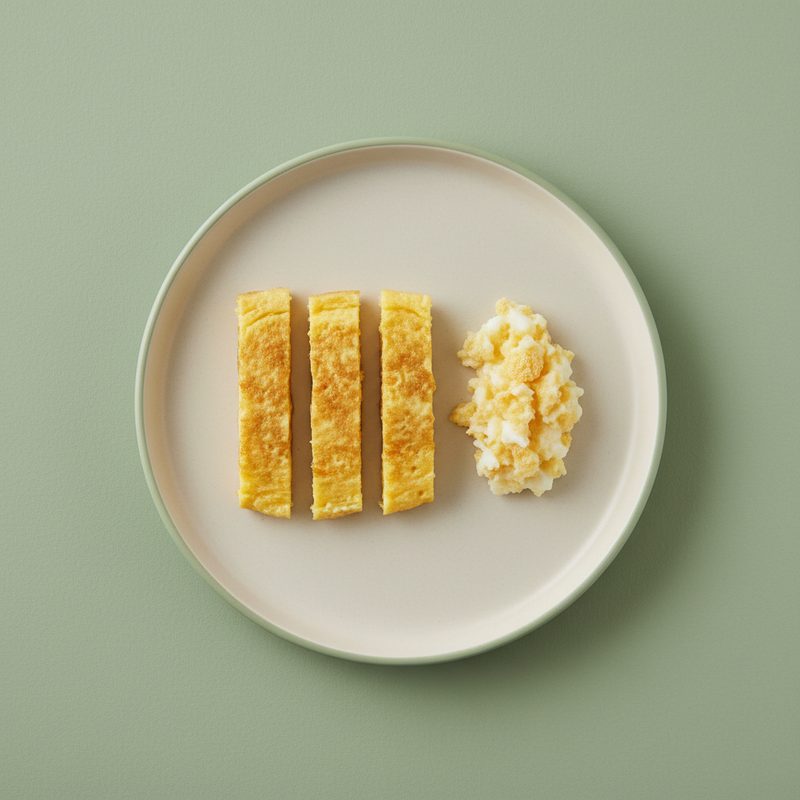 6–8 months
✋ Finger food (BLW)
Finger-length strips of well-cooked plain omelette, about as wide as two adult fingers, are easy to hold.
🥣 Purée or spoon
Mash hard-boiled egg finely and offer it on a spoon, or stir it into vegetable purée or porridge.
-
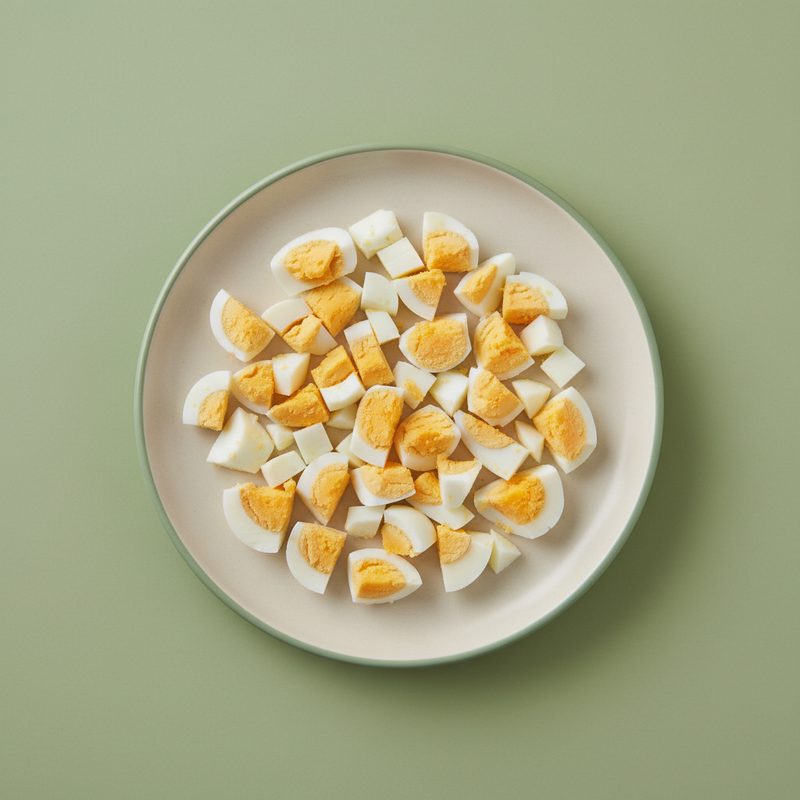 9–12 months
✋ Finger food (BLW)
Chop hard-boiled egg into bite-sized pieces, or offer pieces of well-cooked omelette or scrambled egg.
🥣 Purée or spoon
Mash hard-boiled egg more roughly and mix it into meals.
-
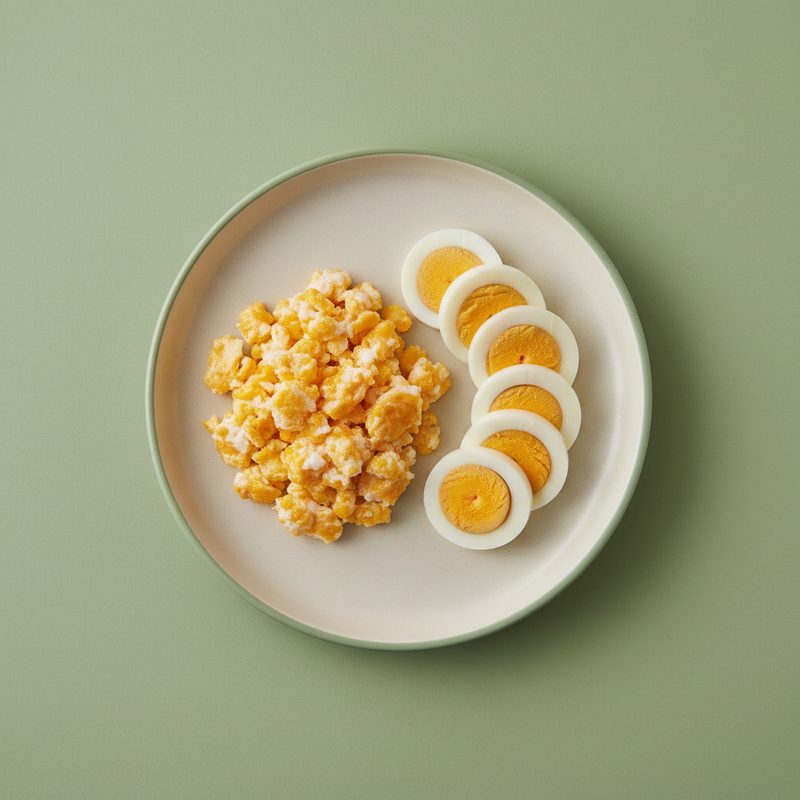 12+ months
✋ Finger food (BLW)
Offer well-cooked scrambled egg, slices of hard-boiled egg, or omelette with vegetables.
🥣 Purée or spoon
Mix well-cooked scrambled egg into rice, pasta or vegetables.
Have egg at home? See what you can cook
Add a second ingredient to see matching Bibful recipes.
226 Bibful recipes with egg
 Soft Scrambled Egg5 min · from 6 months
 Frozen Strawberry, Mung Bean & Egg Bowl5 min · from 6 months
 Banana, Egg & Oat Pancakes6 min · from 6 months
Free to start, with 50+ recipes free · iPhone & Android · no account needed
Preparation tips
- Fully cooked only. Cook egg until the white and yolk are firm. Avoid raw or runny egg, including homemade mayonnaise and uncooked cake mixture.
- Introduce it on its own. Offer egg at a time when you can watch your baby for a reaction, and not alongside another new allergen.
- Keep it going. Once your baby has had egg without a reaction, keep it in their diet regularly.
Frequently asked questions
When can babies eat egg?
From around 6 months, once your baby has started solid foods. Delaying egg does not prevent allergy.
Can babies have runny egg?
Give your baby egg only when the white and yolk are firm. Hard-boiled egg, well-cooked omelette and well-cooked scrambled egg all work.
What are the signs of an egg allergy?
Signs can include a rash or hives, swelling of the lips or face, vomiting, or coughing and wheezing, usually soon after eating. If your baby has trouble breathing or swallowing, call emergency services straight away. For milder signs, stop giving egg and speak to your GP.
More first foods
- 🍎 Apple
- 🥑 Avocado
- 🍌 Banana
- 🥩 Beef
- 🫐 Blueberries
- 🍞 Bread
- 🥦 Broccoli
- 🎃 Butternut squash
- 🥕 Carrot
- 🍗 Chicken
- 🫛 Green beans
- 🫘 Lentils
- 🥣 Oats
- 🥜 Peanut
- 🍐 Pear
- 🐟 Salmon
- 🍓 Strawberries
- 🍠 Sweet potato
- 🥛 Yogurt
Turn this into tonight’s meal
Bibful turns what's in your fridge into age-appropriate weaning meals — no account needed. Available now on iOS & Android.


This page is general information, not medical advice. It follows NHS Start for Life and World Health Organization guidance on introducing solid foods. Always stay with your baby while they eat, and speak to your health visitor or GP if you have concerns about feeding, allergies or choking.