Sweet Potato for Babies: How to Serve It at Every Age
- From around 6 months
- Not a common allergen
- Cook until very soft
Sweet potato is a popular first food from around 6 months: naturally sweet, rich in vitamin A, and easy to cook until soft. Roast, steam or boil it until a piece squashes easily between your fingers.
📲 48 Bibful recipes with sweet potatoHow to serve it by age
-
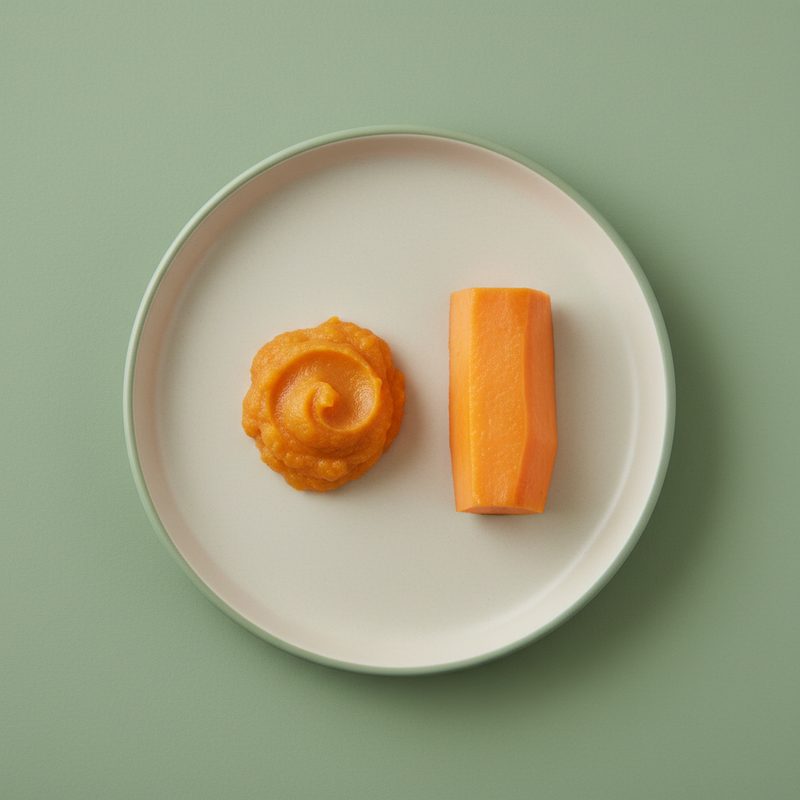 6–8 months
✋ Finger food (BLW)
Offer a large, soft roasted or steamed wedge of peeled sweet potato, about the size of an adult finger.
🥣 Purée or spoon
Mash cooked sweet potato smoothly, on its own or mixed with other vegetables.
-
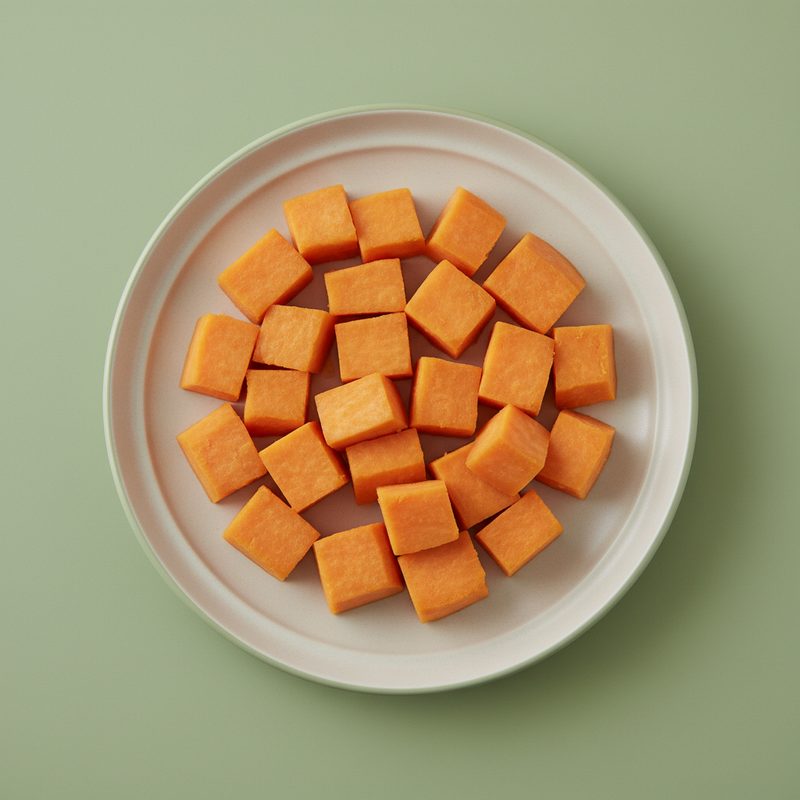 9–12 months
✋ Finger food (BLW)
Cut soft cooked sweet potato into bite-sized pieces of about 1 cm.
🥣 Purée or spoon
Mash it more roughly, or mix it into lentils or rice.
-
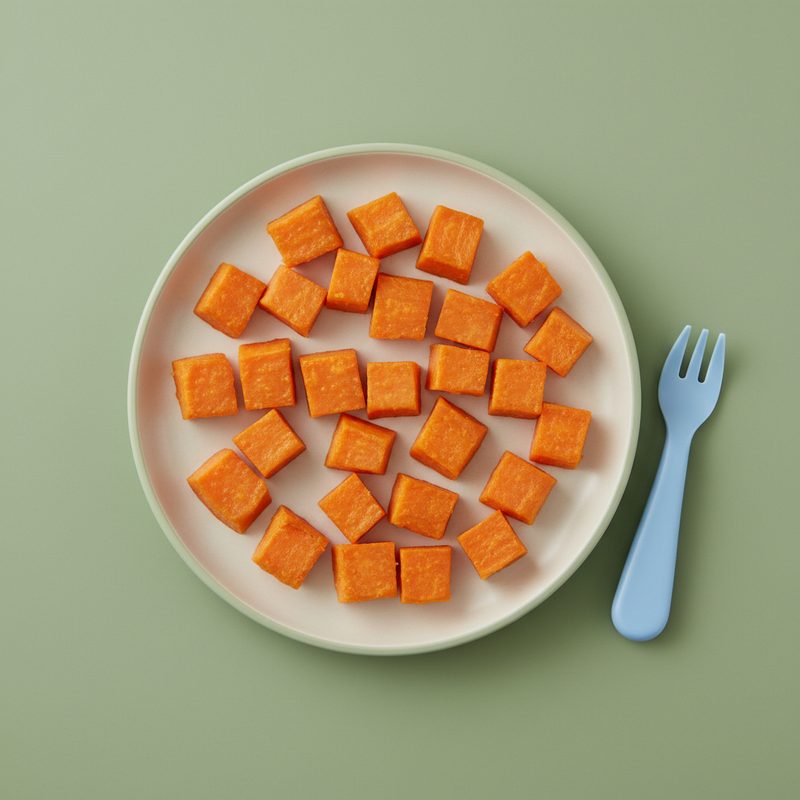 12+ months
✋ Finger food (BLW)
Offer soft pieces and let your toddler practise with a fork.
🥣 Purée or spoon
Mix mashed sweet potato into family meals, or use it as a dip.
Have sweet potato at home? See what you can cook
Add a second ingredient to see matching Bibful recipes.
48 Bibful recipes with sweet potato
 Sweet Potato Toast with Banana & Tahini9 min · from 6 months
 Sweet Potato Spoon-Drop Pancake13 min · from 6 months
 Cheesy Sweet Potato & Carrot Rosti16 min · from 6 months
Free to start, with 50+ recipes free · iPhone & Android · no account needed
Preparation tips
- Soft all the way through. A cooked piece should squash easily between your thumb and finger.
- Peel for babies. The skin can be tough; peel it until your baby is a confident chewer.
- No salt or sugar. Sweet potato is naturally sweet and needs nothing added.
Frequently asked questions
When can babies eat sweet potato?
From around 6 months, mashed or as a large, very soft wedge.
Can babies eat sweet potato skin?
Peel it for young babies, as the skin can be tough to chew. Older toddlers can have soft roasted skin as part of family meals.
More first foods
- 🍎 Apple
- 🥑 Avocado
- 🍌 Banana
- 🥩 Beef
- 🫐 Blueberries
- 🍞 Bread
- 🥦 Broccoli
- 🎃 Butternut squash
- 🥕 Carrot
- 🍗 Chicken
- 🥚 Egg
- 🫛 Green beans
- 🫘 Lentils
- 🥣 Oats
- 🥜 Peanut
- 🍐 Pear
- 🐟 Salmon
- 🍓 Strawberries
- 🥛 Yogurt
Turn this into tonight’s meal
Bibful turns what's in your fridge into age-appropriate weaning meals — no account needed. Available now on iOS & Android.


This page is general information, not medical advice. It follows NHS Start for Life and World Health Organization guidance on introducing solid foods. Always stay with your baby while they eat, and speak to your health visitor or GP if you have concerns about feeding, allergies or choking.