Blueberries for Babies: How to Serve Them Safely by Age
- From around 6 months
- Not a common allergen
- Round: squash or halve
Blueberries can be offered from around 6 months, but whole blueberries are small and round, and that shape is a choking risk. Cook or squash them for young babies, press them flat as your baby learns to pick things up, and cut them in half for toddlers.
📲 28 Bibful recipes with blueberriesHow to serve it by age
-
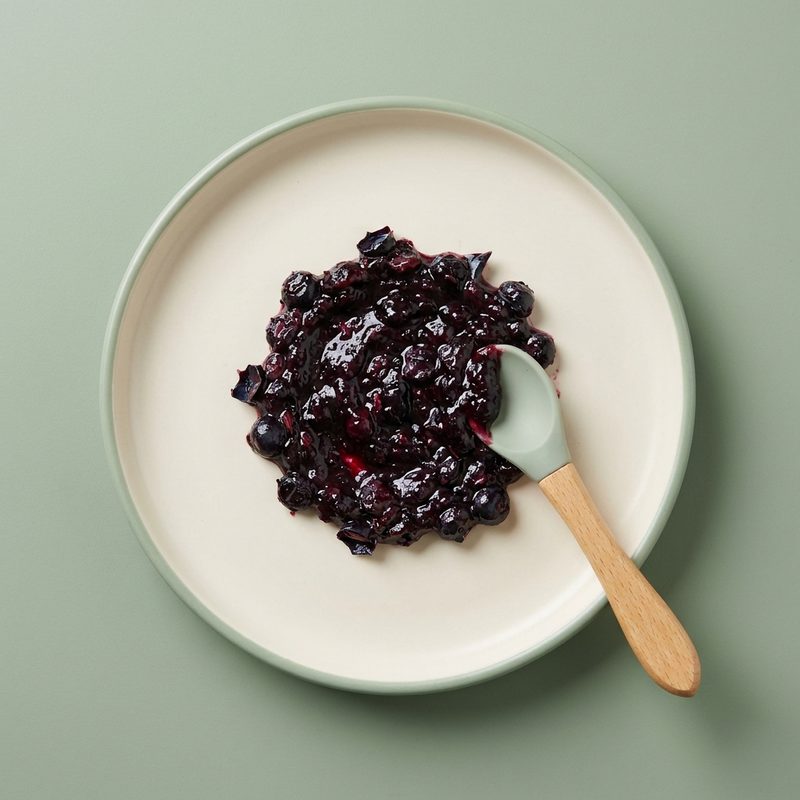 6–8 months
✋ Finger food (BLW)
Press each blueberry completely flat between your fingers, or offer them cooked and squashed.
🥣 Purée or spoon
Squash or cook blueberries and stir them into yoghurt or porridge.
-
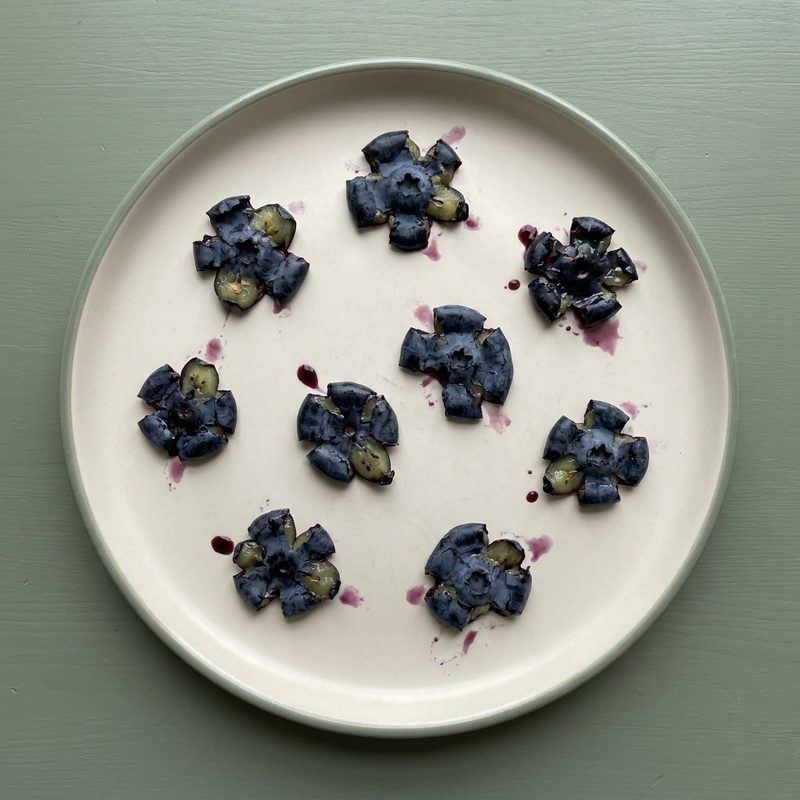 9–12 months
✋ Finger food (BLW)
Flatten each blueberry so it’s no longer round, for pincer-grasp practice.
🥣 Purée or spoon
Stir squashed blueberries into porridge, yoghurt or pancakes.
-
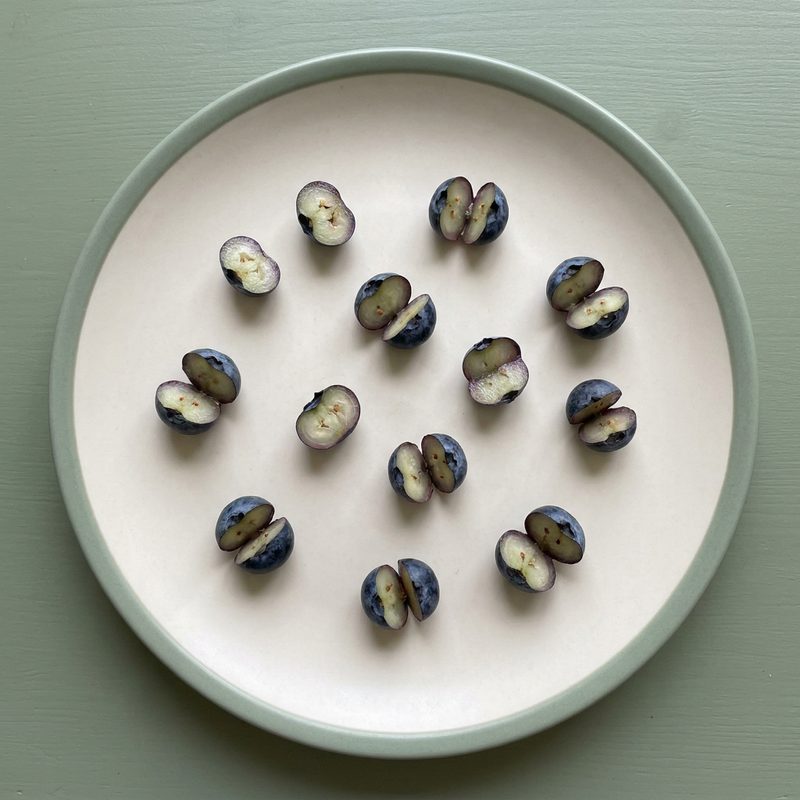 12+ months
✋ Finger food (BLW)
Squash or halve blueberries, or bake them into soft pancakes or muffins, where they cook soft.
🥣 Purée or spoon
Mix halved or squashed blueberries into breakfasts and baking.
Have blueberries at home? See what you can cook
Add a second ingredient to see matching Bibful recipes.
28 Bibful recipes with blueberries
 Avocado, Banana & Blueberry Purée5 min · from 6 months
 Pear, Beetroot & Blueberry Overnight Oats5 min · from 6 months
 Frozen Strawberry, Mung Bean & Egg Bowl5 min · from 6 months
Free to start, with 50+ recipes free · iPhone & Android · no account needed
Preparation tips
- Round is risky. Small round foods like blueberries, grapes and cherry tomatoes are a choking risk. Squash, flatten or halve them.
- Frozen works too. Thaw frozen blueberries and squash them; they’re soft and easy to flatten.
- Purple everywhere. Blueberries stain. A bib and a wipeable floor help.
Frequently asked questions
Can babies eat whole blueberries?
Not while they are young. Whole blueberries are small and round, which is a choking risk. Squash, flatten or halve them.
When can babies eat blueberries?
From around 6 months, cooked or squashed into food, or pressed flat as a finger food.
More first foods
- 🍎 Apple
- 🥑 Avocado
- 🍌 Banana
- 🥩 Beef
- 🍞 Bread
- 🥦 Broccoli
- 🎃 Butternut squash
- 🥕 Carrot
- 🍗 Chicken
- 🥚 Egg
- 🫛 Green beans
- 🫘 Lentils
- 🥣 Oats
- 🥜 Peanut
- 🍐 Pear
- 🐟 Salmon
- 🍓 Strawberries
- 🍠 Sweet potato
- 🥛 Yogurt
Turn this into tonight’s meal
Bibful turns what's in your fridge into age-appropriate weaning meals — no account needed. Available now on iOS & Android.


This page is general information, not medical advice. It follows NHS Start for Life and World Health Organization guidance on introducing solid foods. Always stay with your baby while they eat, and speak to your health visitor or GP if you have concerns about feeding, allergies or choking.