Beef for Babies: How to Serve It at Every Age
- From around 6 months
- Not a common allergen
- Cook through, keep it tender
Beef can be offered from around 6 months and is one of the best sources of iron for babies. Slow-cook it until it falls apart, or use mince in a sauce. Cook it right through, and keep it moist: tough, dry meat is hard to chew.
📲 22 Bibful recipes with beefHow to serve it by age
-
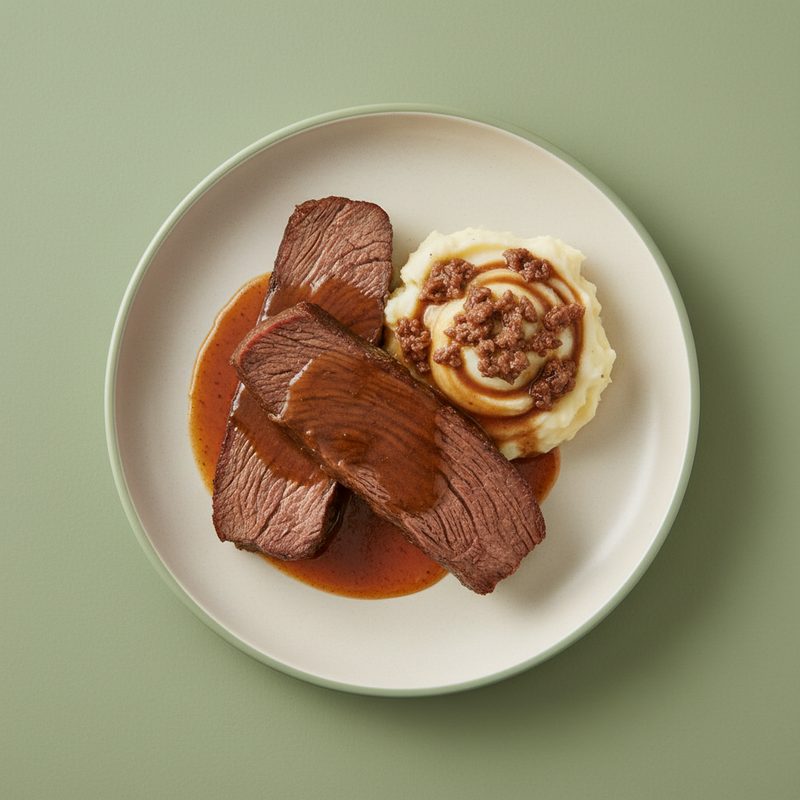 6–8 months
✋ Finger food (BLW)
Offer long strips of slow-cooked, very tender beef, about two adult fingers wide, with fat and gristle removed.
🥣 Purée or spoon
Mix well-cooked mince in a little sauce into mashed potato or vegetables.
-
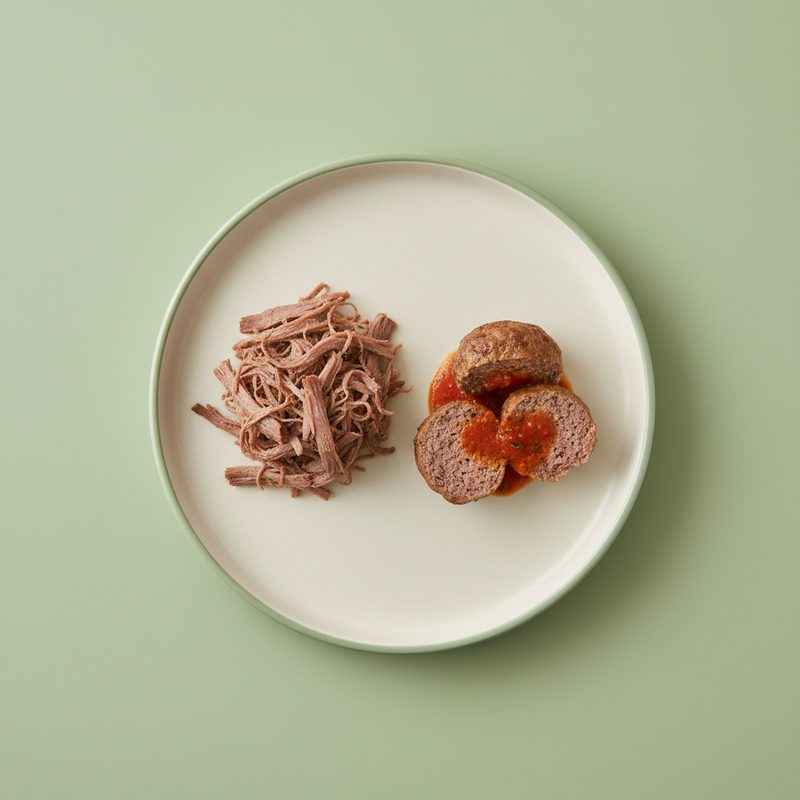 9–12 months
✋ Finger food (BLW)
Offer thin, soft shreds of slow-cooked beef, or soft homemade meatballs cut in half.
🥣 Purée or spoon
Serve mince in a soft pasta sauce or a stew with soft vegetables.
-
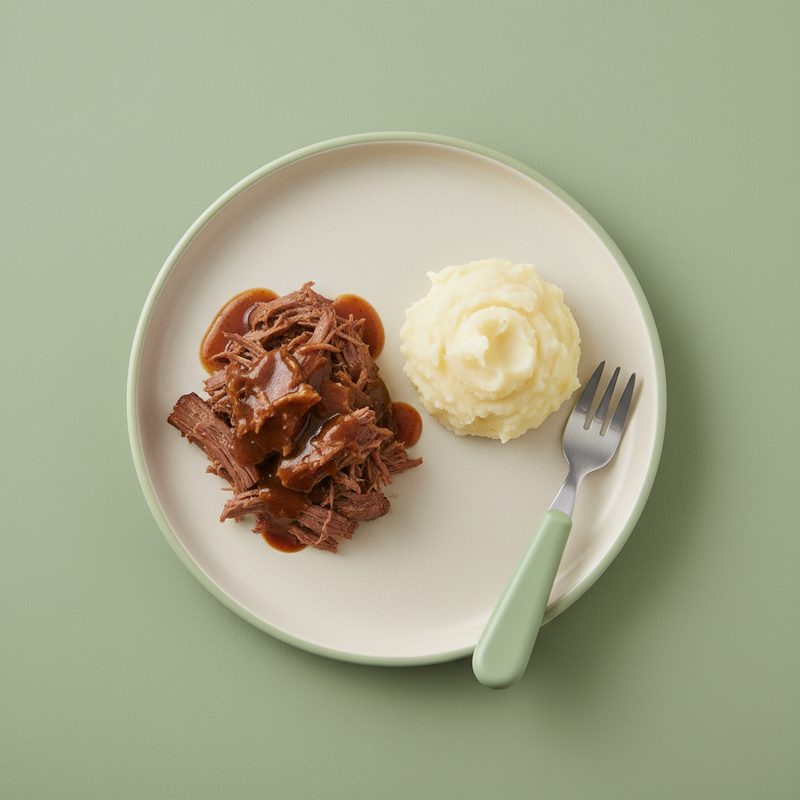 12+ months
✋ Finger food (BLW)
Offer small, thin, soft pieces, not chunks or cubes, and let your toddler practise with a fork.
🥣 Purée or spoon
Share family stews, bolognese and cottage pie made without added salt.
Have beef at home? See what you can cook
Add a second ingredient to see matching Bibful recipes.
22 Bibful recipes with beef
 Quick Beef Ragu20 min · from 6 months
 Sweet Potato & Beef Mash35 min · from 6 months
 Beef & Kidney Bean Chili45 min · from 6 months
Free to start, with 50+ recipes free · iPhone & Android · no account needed
Preparation tips
- Slow-cooked or minced. Braised cuts that fall apart, and mince, are much easier to chew than steak.
- Cooked through. Mince and meatballs should have no pink left inside.
- Skip processed meat. Sausages, burgers and ham are high in salt; make your own meatballs without salt instead.
Frequently asked questions
When can babies eat beef?
From around 6 months, slow-cooked until very tender or as well-cooked mince mixed into soft food.
Why is beef good for babies?
Babies' iron stores run low from around 6 months, and red meat is one of the easiest sources of iron for the body to absorb.
More first foods
- 🍎 Apple
- 🥑 Avocado
- 🍌 Banana
- 🫐 Blueberries
- 🍞 Bread
- 🥦 Broccoli
- 🎃 Butternut squash
- 🥕 Carrot
- 🍗 Chicken
- 🥚 Egg
- 🫛 Green beans
- 🫘 Lentils
- 🥣 Oats
- 🥜 Peanut
- 🍐 Pear
- 🐟 Salmon
- 🍓 Strawberries
- 🍠 Sweet potato
- 🥛 Yogurt
Turn this into tonight’s meal
Bibful turns what's in your fridge into age-appropriate weaning meals — no account needed. Available now on iOS & Android.


This page is general information, not medical advice. It follows NHS Start for Life and World Health Organization guidance on introducing solid foods. Always stay with your baby while they eat, and speak to your health visitor or GP if you have concerns about feeding, allergies or choking.