Strawberries for Babies: How to Serve Them at Every Age
- From around 6 months
- Not a common allergen
- Large and ripe, or mashed
Strawberries can be offered from around 6 months: sweet, juicy and rich in vitamin C. Choose large, ripe, soft berries, take off the green tops and wash them well. Small, firm berries are a choking risk, so mash or cut them.
📲 14 Bibful recipes with strawberriesHow to serve it by age
-
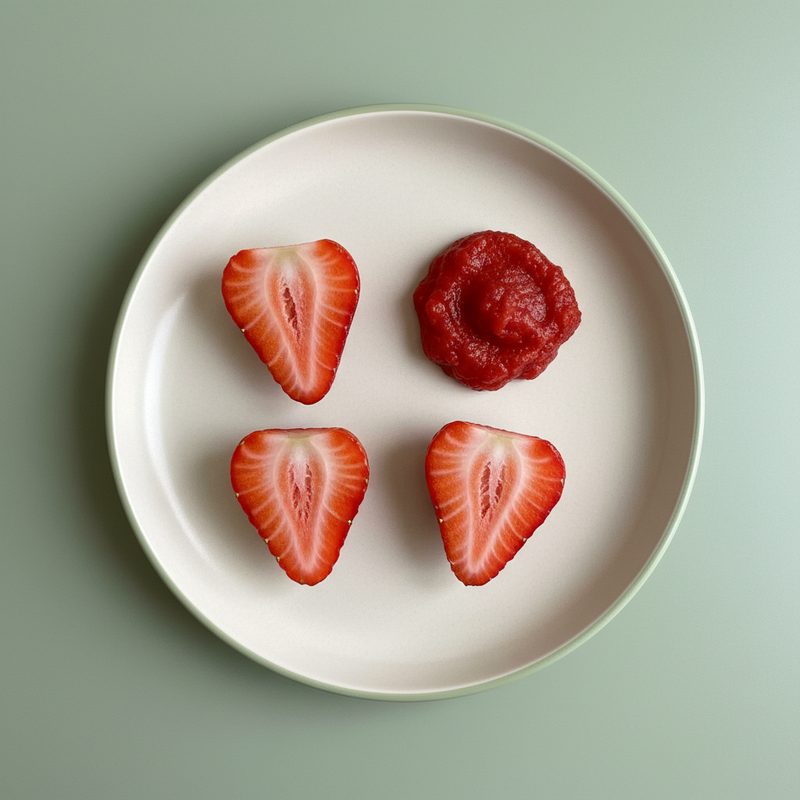 6–8 months
✋ Finger food (BLW)
Offer very large, ripe strawberries cut in half lengthwise, with the green top removed.
🥣 Purée or spoon
Mash ripe strawberries and stir them into yogurt or porridge.
-
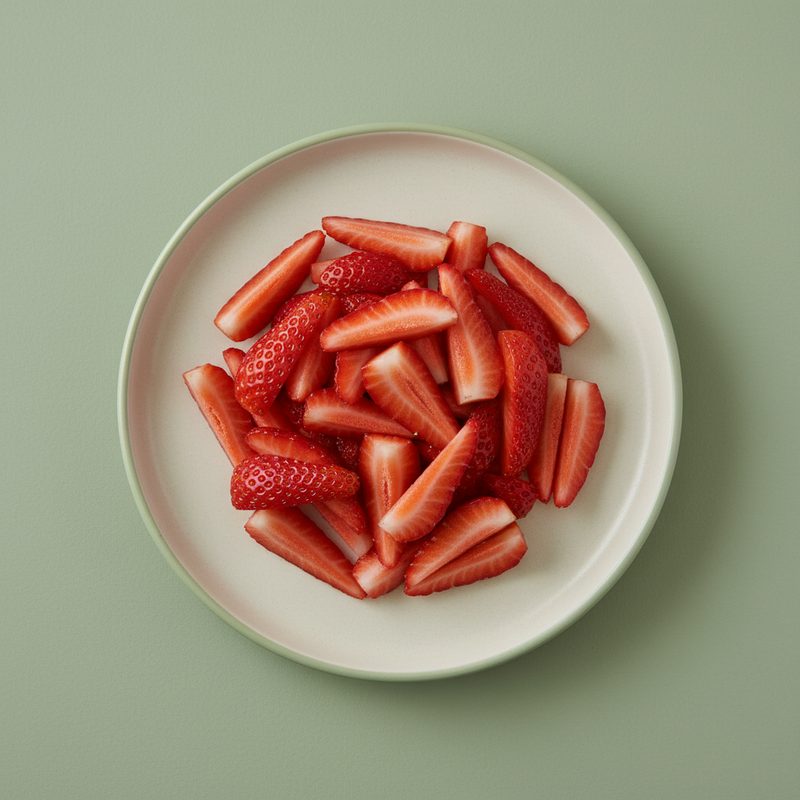 9–12 months
✋ Finger food (BLW)
Cut ripe strawberries lengthwise into thin slices, about 3 mm thick.
🥣 Purée or spoon
Stir chopped or mashed strawberries into yogurt, porridge or pancake batter.
-
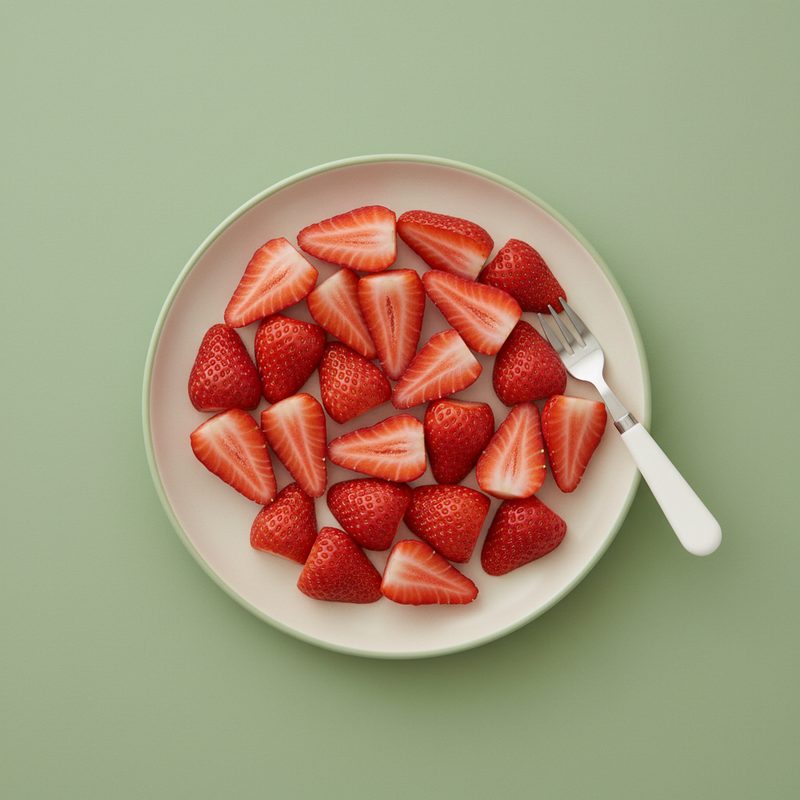 12+ months
✋ Finger food (BLW)
Cut strawberries lengthwise into quarters and let your toddler practise with a fork.
🥣 Purée or spoon
Add chopped strawberries to breakfasts and family desserts.
Have strawberries at home? See what you can cook
Add a second ingredient to see matching Bibful recipes.
14 Bibful recipes with strawberries
 Strawberry & Banana Purée2 min · from 6 months
 Frozen Strawberry, Mung Bean & Egg Bowl5 min · from 6 months
 Eggy Bread with Strawberry Yoghurt10 min · from 6 months
Free to start, with 50+ recipes free · iPhone & Android · no account needed
Preparation tips
- Cut small berries. If a whole berry could fit in your baby's mouth, cut it lengthwise or mash it.
- Red skin around the mouth is common. The acid in strawberries often causes a harmless rash where the juice touches the skin.
- Wash well. Rinse strawberries under running water just before serving.
Frequently asked questions
When can babies eat strawberries?
From around 6 months, mashed or as very large, ripe halves.
Is a red rash around the mouth an allergy?
Usually not. Strawberry juice often irritates the skin where it touches. Swelling, hives on the body, vomiting or breathing difficulty are different: get medical help.
More first foods
- 🍎 Apple
- 🥑 Avocado
- 🍌 Banana
- 🥩 Beef
- 🫐 Blueberries
- 🍞 Bread
- 🥦 Broccoli
- 🎃 Butternut squash
- 🥕 Carrot
- 🍗 Chicken
- 🥚 Egg
- 🫛 Green beans
- 🫘 Lentils
- 🥣 Oats
- 🥜 Peanut
- 🍐 Pear
- 🐟 Salmon
- 🍠 Sweet potato
- 🥛 Yogurt
Turn this into tonight’s meal
Bibful turns what's in your fridge into age-appropriate weaning meals — no account needed. Available now on iOS & Android.


This page is general information, not medical advice. It follows NHS Start for Life and World Health Organization guidance on introducing solid foods. Always stay with your baby while they eat, and speak to your health visitor or GP if you have concerns about feeding, allergies or choking.