Peas for Babies: When to Start and How to Serve Them by Age
- From around 6 months
- Not a common allergen
- Small and round: squash them
Peas can be offered from around 6 months, once your baby has started solids. They’re small and round, so for younger babies mash them or squash each pea flat. Mashed peas spread on toast fingers make an easy first finger food. From about 9 months, squashed peas are great for practising the pincer grip; soft whole peas suit toddlers who chew well. Frozen peas are fine.
📲 37 Bibful recipes with peasHow to serve it by age
-
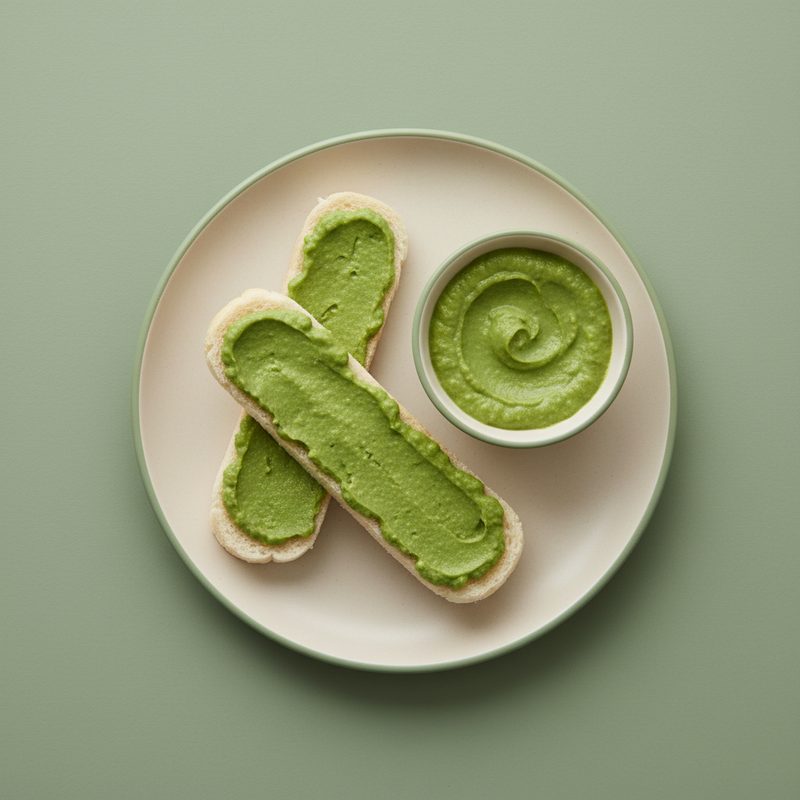 6–8 months
✋ Finger food (BLW)
Mashed peas spread on soft toast fingers.
🥣 Purée or spoon
Blend cooked peas with potato or courgette.
-
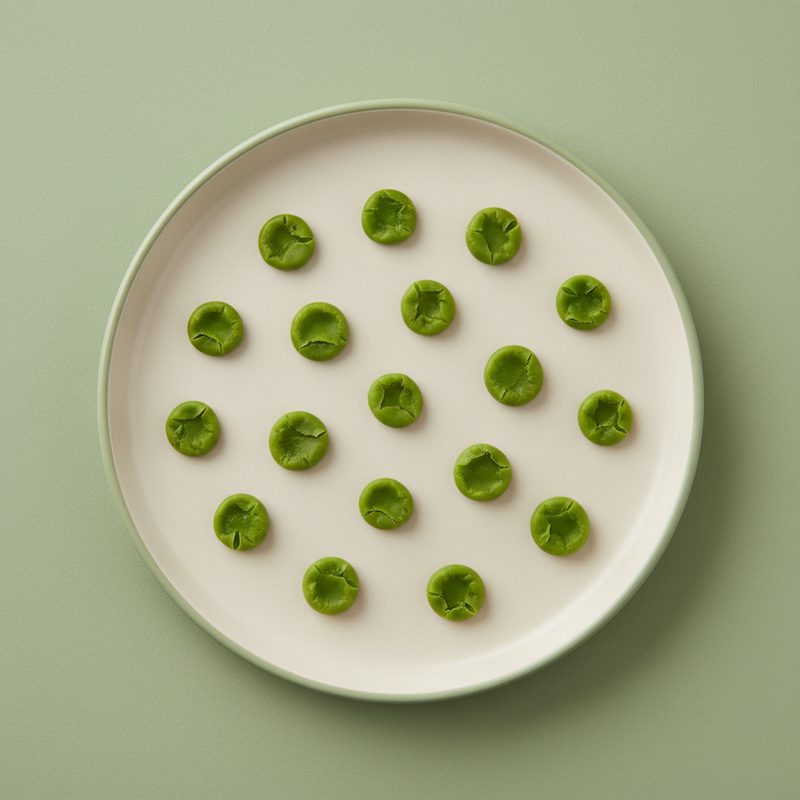 9–12 months
✋ Finger food (BLW)
Soft cooked peas, each squashed flat, to pick up one by one.
🥣 Purée or spoon
Stir squashed peas into pasta, rice or mashed potato.
-
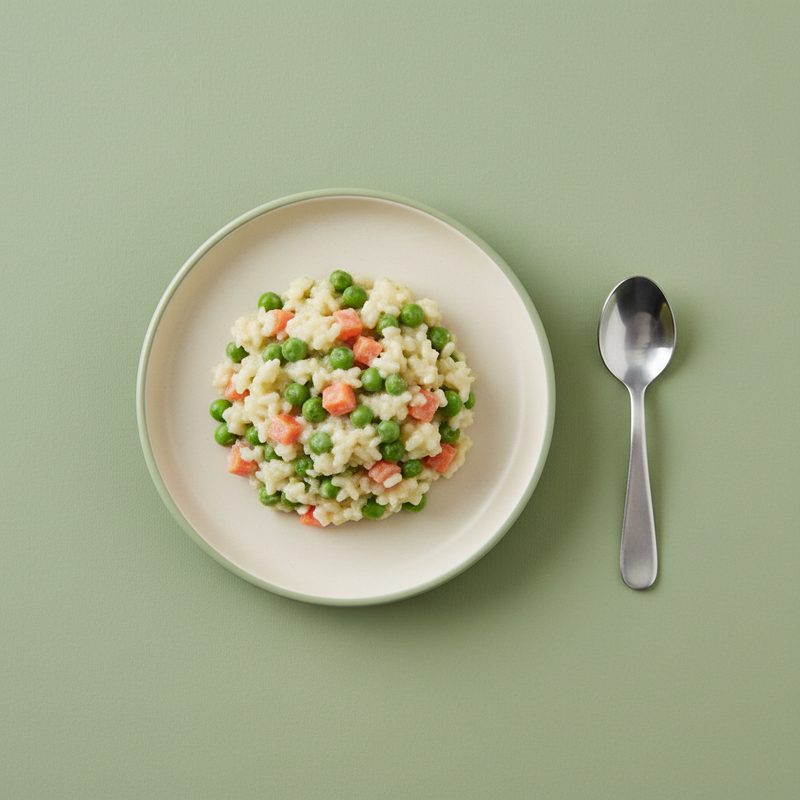 12+ months
✋ Finger food (BLW)
Soft whole peas in family meals, squashed if your toddler isn’t chewing well yet.
🥣 Purée or spoon
Peas in risotto, pasta, soups and fish pie.
Have peas at home? See what you can cook
Add a second ingredient to see matching Bibful recipes.
37 Bibful recipes with peas
 Quinoa-Crumbed Salmon Fingers with Minted Peas22 min · from 6 months
 Cod, Spinach, Potato & Peas23 min · from 6 months
 White Fish Congee with Peas25 min · from 6 months
Free to start, with 50+ recipes free · iPhone & Android · no account needed
Preparation tips
- Squash them. Press each cooked pea flat with a fork or your thumb; whole, they’re a small round shape that’s harder to manage.
- Frozen is fine. Frozen peas cook in minutes and are just as good as fresh.
- Pincer practice. From about 9 months, squashed peas are just the right size for picking up between finger and thumb.
Frequently asked questions
When can babies eat peas?
From around 6 months, once your baby has started solids, mashed or squashed flat.
Are whole peas a choking risk?
Whole peas are small and round, so mash or squash them for babies. Once your toddler chews well, soft whole peas are fine. Always stay with your child while they eat.
Can I use tinned peas?
Frozen peas are best. Tinned peas often have added salt and sugar, so check the label and choose ones in water.
More first foods
- 🍎 Apple
- 🥑 Avocado
- 🍌 Banana
- 🥩 Beef
- 🫐 Blueberries
- 🍞 Bread
- 🥦 Broccoli
- 🎃 Butternut squash
- 🥕 Carrot
- 🥦 Cauliflower
- 🌿 Celery
- 🧀 Cheese
- 🍗 Chicken
- 🫘 Chickpeas
- 🥥 Coconut
- 🥒 Courgette
- 🥚 Egg
- 🫛 Green beans
- 🍖 Lamb
- 🫘 Lentils
- 🥭 Mango
- 🥛 Cow’s milk
- 🥣 Oats
- 🍝 Pasta
- 🥜 Peanut
- 🍐 Pear
- 🥔 Potato
- 🦐 Prawns
- 🫑 Red pepper
- 🍚 Rice
- 🐟 Salmon
- 🥬 Spinach
- 🍓 Strawberries
- 🍠 Sweet potato
- 🥄 Tahini
- Tofu
- 🍅 Tomato
- 🌰 Walnut
- 🥛 Yogurt
Turn this into tonight’s meal
Bibful turns what's in your fridge into age-appropriate weaning meals — no account needed. Available now on iOS & Android.


This page is general information, not medical advice. It follows NHS Start for Life and World Health Organization guidance on introducing solid foods. Always stay with your baby while they eat, and speak to your health visitor or GP if you have concerns about feeding, allergies or choking.