Mango for Babies: When to Start and How to Serve It by Age
- From around 6 months
- Not a common allergen
- Ripe and peeled
Mango can be offered from around 6 months, once your baby has started solids. Choose a ripe mango that gives a little when pressed, peel it, and cut the flesh away from the large flat stone. Long spears are easy to hold at first; later, cut it into small soft pieces. Mango is slippery, so rolling spears in finely ground oats can make them easier to grip.
📲 9 Bibful recipes with mangoHow to serve it by age
-
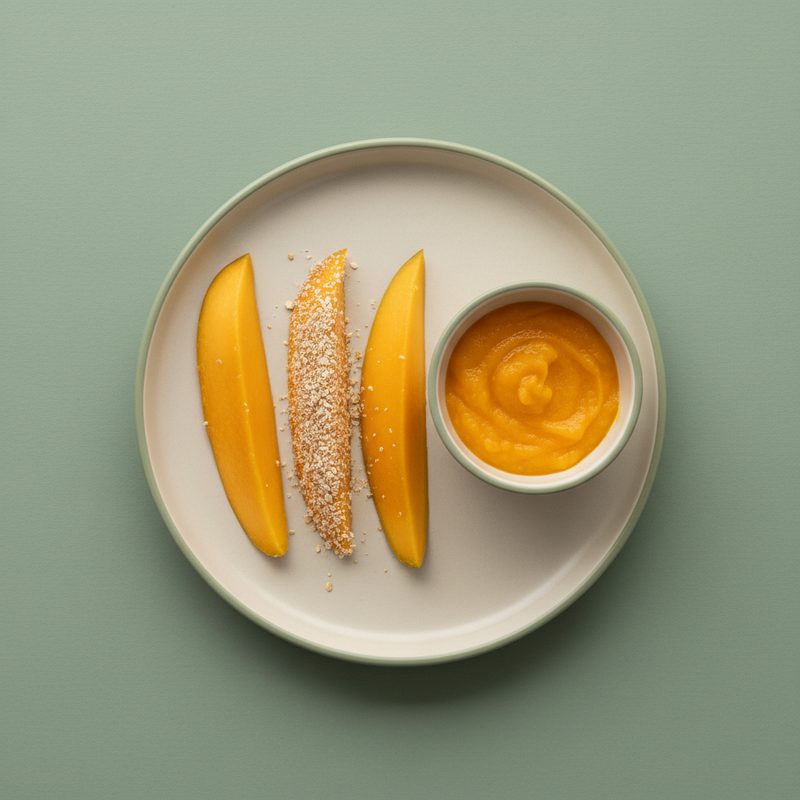 6–8 months
✋ Finger food (BLW)
Long spears of ripe, peeled mango, about the size of an adult finger.
🥣 Purée or spoon
Mashed ripe mango, on its own or stirred into yogurt or porridge.
-
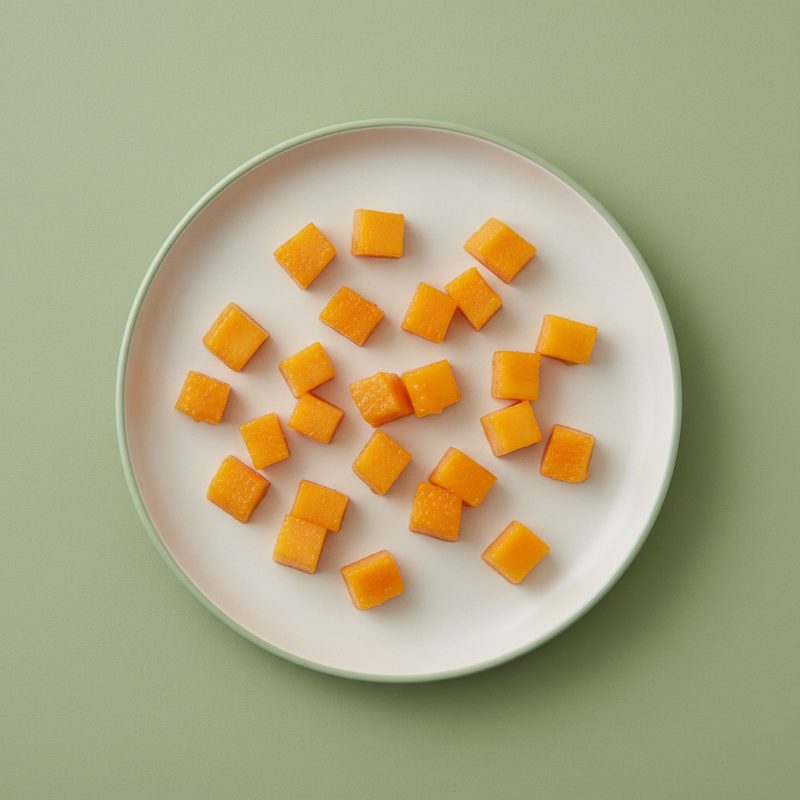 9–12 months
✋ Finger food (BLW)
Small soft pieces of ripe mango.
🥣 Purée or spoon
Mango mashed into yogurt or porridge.
-
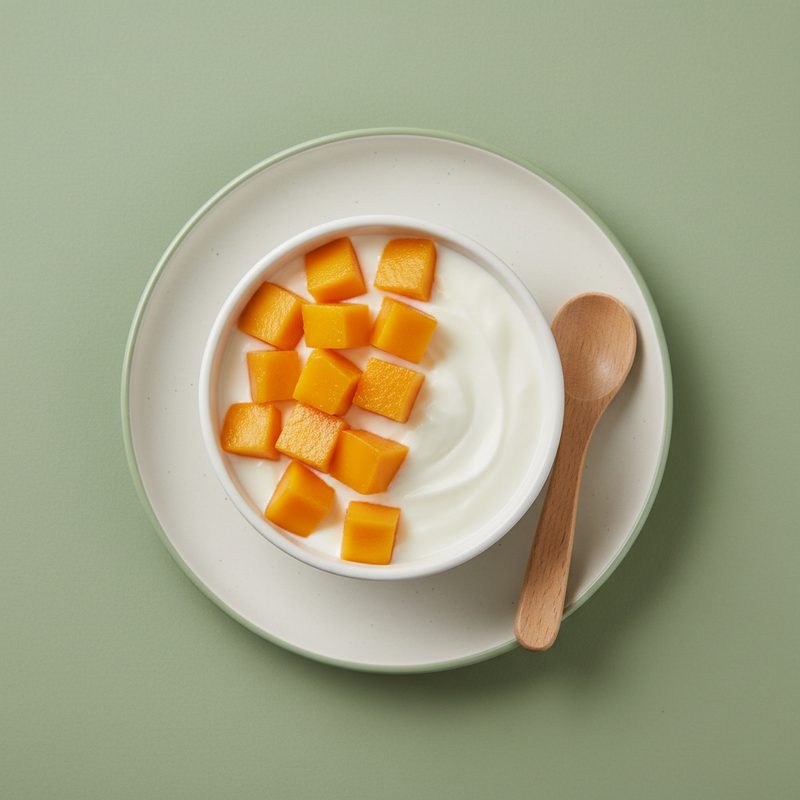 12+ months
✋ Finger food (BLW)
Bite-sized pieces of ripe mango.
🥣 Purée or spoon
Mango with yogurt or on porridge.
Have mango at home? See what you can cook
Add a second ingredient to see matching Bibful recipes.
9 Bibful recipes with mango
 Mango & Banana Purée3 min · from 6 months
 Creamy Mango & Raspberry Ice Lollies10 min · from 6 months
 Oat, Mango & Blueberry Bowl11 min · from 6 months
Free to start, with 50+ recipes free · iPhone & Android · no account needed
Preparation tips
- Ripe and soft. A ripe mango gives a little when gently pressed; firm, unripe mango is harder to manage.
- Peel it. Mango skin is tough and can irritate the skin around the mouth, so peel it for babies.
- Better grip. Mango is slippery; rolling spears in finely ground oats gives little hands more grip.
Frequently asked questions
When can babies eat mango?
From around 6 months, once your baby has started solids, as ripe peeled spears or mashed.
Why does my baby get a red rash around the mouth after mango?
Mango juice and skin can irritate delicate skin, causing redness where it touched; it usually fades quickly. If your baby also has swelling, hives elsewhere or vomiting, stop and speak to your GP.
Can babies have dried mango?
Dried mango is tough and sticky, so it’s harder to manage and clings to teeth. Fresh ripe mango is best for babies.
More first foods
- 🍎 Apple
- 🥑 Avocado
- 🍌 Banana
- 🥩 Beef
- 🫐 Blueberries
- 🍞 Bread
- 🥦 Broccoli
- 🎃 Butternut squash
- 🥕 Carrot
- 🥦 Cauliflower
- 🌿 Celery
- 🧀 Cheese
- 🍗 Chicken
- 🫘 Chickpeas
- 🥥 Coconut
- 🥒 Courgette
- 🥚 Egg
- 🫛 Green beans
- 🍖 Lamb
- 🫘 Lentils
- 🥛 Cow’s milk
- 🥣 Oats
- 🍝 Pasta
- 🥜 Peanut
- 🍐 Pear
- 🫛 Peas
- 🥔 Potato
- 🦐 Prawns
- 🫑 Red pepper
- 🍚 Rice
- 🐟 Salmon
- 🥬 Spinach
- 🍓 Strawberries
- 🍠 Sweet potato
- 🥄 Tahini
- Tofu
- 🍅 Tomato
- 🌰 Walnut
- 🥛 Yogurt
Turn this into tonight’s meal
Bibful turns what's in your fridge into age-appropriate weaning meals — no account needed. Available now on iOS & Android.


This page is general information, not medical advice. It follows NHS Start for Life and World Health Organization guidance on introducing solid foods. Always stay with your baby while they eat, and speak to your health visitor or GP if you have concerns about feeding, allergies or choking.